
Picassent · Valencia · 2026/2027 school year
Extracurricular Activities
23 activities at lunchtime, on campus.
Sport, languages, music, art, technology and academic support, from Preschool to Bachillerato, on the same campus where your child spends the day. This is the full catalogue for 2026/2027.
Beyond the school day
Every child finds their thing without leaving campus.
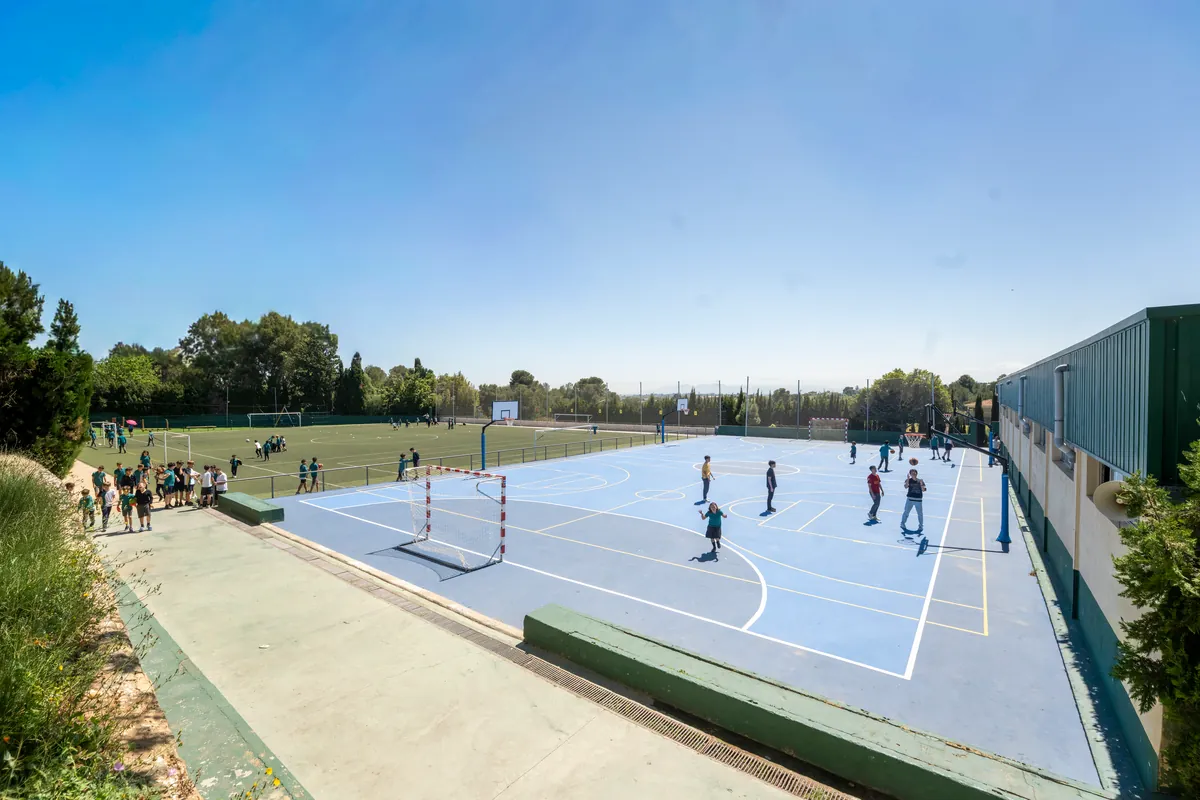
All extracurricular activities at Ausiàs March take place at lunchtime, during the lunch and break period, on campus. The afternoon stays free and the family has no second journey.
- On campus, at lunchtime, one day a week (two for Football, Roller skating and Basketball).
- From Preschool to Bachillerato, depending on the activity.
- Five areas: languages and academic support, sport, creative arts, performing arts and technology.
- Groups run from 8 students, 6 for the Cambridge courses.


2026/2027 catalogue
Every activity, area by area.
Filter by your child's stage to see only what applies to them. Each activity shows the year groups it is open to and its monthly price.
An early introduction to German, opening a wide range of academic and professional opportunities.
Early language acquisition reinforces the school's language programme and gives students a genuine advantage for the future.
Minimum 8 students to run the activity.
An engaging and effective introduction to French that complements the school's language programme.
Early language learning stimulates cognitive development, boosts creativity, and prepares students for the demands of a globalised world.
Minimum 8 students to run the activity.
Mandarin Chinese is one of the languages with the greatest international reach.
This activity combines language learning with an introduction to Chinese culture, stimulating brain plasticity and offering a completely different perspective on learning.
Specific materials will be communicated to enrolled families at the start of the activity.
Small-group support to consolidate comprehension, oral and written expression and Valencian grammar.
The sessions are coordinated with what is covered in class, so each pupil gains confidence in the subject.
A space to strengthen arithmetic, problem solving and logical reasoning, at each pupil's own pace.
Classroom content is reviewed through practical exercises and maths games, so that numbers stop being an obstacle.
Guided study time to do homework, revise and get organised with a teacher's support.
Pupils acquire study techniques and independent working habits that will serve them throughout their school years.
Chess develops core thinking skills essential for cognitive growth: creativity, visual memory, decision-making, and problem-solving.
Sessions take place in the computer room using online platforms and games against students from other schools. Fun first, technique second.
Minimum 8 students to run the activity.
Targeted preparation for official Cambridge examinations in small groups with specialist teachers: Starters (Year 2 Primary), Flyers (Year 5 Primary), B1 (from Year 8) and B2 (from Year 9).
Structured support that gives students the confidence to pass with ease.
Minimum 6 students to run the activity.
For the youngest students: development of motor, emotional, and cognitive skills through movement and play.
The aim is to master body movement while having fun, with early exposure to a variety of sports.
Minimum 8 students to run the activity.
Judo as a physical education method that develops respect for others, self-control, and fair play.
For younger students, we offer Judo-Oriented Motor Skills, extended with self-defence exercises.
Minimum 8 students to run the activity.
Athletics as a space for fun, physical development, and self-knowledge.
Under the guidance of qualified coaches, students develop their motor skills and build new forms of social connection.
Minimum 8 students to run the activity.
Technique, fitness and discipline in a safe, supervised setting.
Boxing works on coordination, stamina and concentration, and reinforces values such as respect, self-control and personal improvement.
Minimum 8 students to run the activity.
Football as a school for life: technical skills, teamwork, and the drive to improve.
The Ausiàs March Football School develops the specific skills of the game alongside the values of collective sport.
Minimum 8 students to run the activity.
A fun way to get active and socialise.
From basic movement skills to direction changes, slalom, and artistic skating positions.
Classes are built around games and exercises that teach and entertain at the same time.
Minimum 8 students to run the activity.
Solidarity, generosity, effort, and respect: the values of basketball are the values we look for in every student.
Progressive technical training with a healthy competitive spirit.
Minimum 8 students to run the activity.
Cooking is far more than a recipe: it is motor skills, maths, hygiene, culture, and self-confidence.
Students learn real techniques, discover dishes from other countries, calculate proportions, and work as a team. They thought they were just coming to cook.
Minimum 8 students to run the activity. Specific materials will be communicated to enrolled families at the start of the activity.
Personalised drawing and painting classes in a calm, relaxed setting, aimed at uncovering the artistic spirit in every student.
Charcoal, pencil, tempera, watercolour, pastel, acrylic, and oil.
At the end of the year, students exhibit their best work.
Minimum 8 students to run the activity.
Jumps, balances, turns, and flexibility in coordination with music.
Rhythmic gymnastics develops emotional stability, concentration, reflexes, and the confidence that comes before every performance.
Minimum 8 students to run the activity.
Learning to play a musical instrument builds self-esteem in a meaningful way.
Through the guitar, students develop technique, understand harmony and musical language, and work on their first original compositions.
Singing in a group to discover your own voice and the pleasure of making music together.
Pupils work on breathing, tuning and rhythm with a varied repertoire, and share what they have learned at school performances during the year (Christmas festival, Peace Day, Open Day…).
Movement, rhythm and body expression through different dance styles.
Dance improves coordination, flexibility and memory, and helps pupils gain confidence and express themselves freely.
The perfect combination of robotics and English.
Dynamic, hands-on sessions where students develop digital competence, technological creativity, and teamwork.
Progressive tools by age: Lego Express, KUBO, and Scratch in preschool; Lego WeDo 2.0 in Primary; Sphero robots and Coding workshops in upper years.
Minimum 8 students to run the activity. Activity taught in English.
First steps in the digital world: programming, computational thinking and creative use of technology.
Through hands-on projects, pupils learn to create with technology and not just use it, developing logic and problem solving.
Minimum 8 students to run the activity. Activity taught in Spanish.
Good to know
How it works, in practice.
- All activities take place at lunchtime, during the lunch and break period, one day a week.
- Football, Roller skating and Basketball also offer a two-day option, on the days set for each one.
- Activities are organised by age and year group: Preschool, Primary, Secondary and Bachillerato, depending on the activity.
- Each group runs from 8 enrolled students, 6 for the Cambridge courses.
- Any specific materials for an activity are communicated to enrolled families at the start.
- Prices are shown per month, but billed per term.
- The annual fee is split into three instalments: October, December and March.
- It is possible to join once the term has started if places are available; the fee is adjusted to the remaining sessions.
- Withdrawals for the following term are communicated by email before the start of the billing month. Changes of activity are authorised if places are available.
- More information: info@ausiasmarch.com
General Guidelines
The essentials are above. The full General Guidelines are in the PDF catalogue: schedules, registration and enrolment, how activities are organised, prices and payments, joining, leaving and changing activity, behaviour and acceptance of the conditions.
Download the 2026/2027 catalogue with the General Guidelines (PDF, bilingual)Frequently asked questions
What families ask us about extracurriculars.
Admissions open · 2026/2027 school year
Tell us what your child loves and we will tell you what awaits them here.
The best way to see what our lunchtimes are like is to visit the campus in person. No obligation.
Contact the admissions team